⛰️ The Geological Significance of the Palakkad Gap
The Palakkad Gap (or Palghat Gap) is a monumental geological feature in the Western Ghats mountain range of India, running approximately 30–40 kilometers wide through Palakkad, Kerala. Its significance is immense, acting as a crucial window into India’s deep past and influencing the region’s climate and biodiversity.
1. Window into the Crustal Past (Plate Tectonics)
The primary geological significance of the Palakkad Gap is its role as a major tectonic weakness within the ancient crust of the Indian Plate.
- Ancient Rift Valley: Most geologists agree that the Gap represents an ancient rift valley or a zone of crustal thinning and weakness that was active during the supercontinent era of Gondwana.
- Failed Rift or Shear Zone: The Gap is often associated with the Achankovil Shear Zone (ACSZ), a massive fault system running across South India. The Gap itself is thought to be the surface expression of this deep-seated crustal fracture.
- Shear Zone: A shear zone is a broad zone where rocks have been heavily fractured and deformed by intense shearing stress. The rocks in the Gap area are highly fractured, supporting this theory.
- India-Madagascar Connection: As detailed earlier, the Palakkad Gap lies along the line where the Indian subcontinent was once connected to Madagascar. The weakness that led to the formation of the Gap may have been instrumental in focusing the forces that ultimately separated India from Madagascar around 170–165 million years ago.
2. Composition and Rock Types
The geological composition within the Gap differs notably from the towering mountain flanks surrounding it.
- Charnockite Flanks: The elevated sections of the Western Ghats on either side of the gap are made of hard, erosion-resistant charnockites (a type of gneiss).
- Gneissic Floor: The floor of the Gap itself is generally composed of softer, weathered migmatite gneisses and khondalites. These rock types are less resistant to erosion, which allowed the geological forces (and later wind/water) to carve out the wide valley. The presence of these different rock types highlights the distinct geological processes at play in this narrow corridor.
3. Climatic and Biogeographic Influence
While fundamentally a geological feature, the Palakkad Gap has profound non-geological effects, making it an ecological and climatic anomaly.
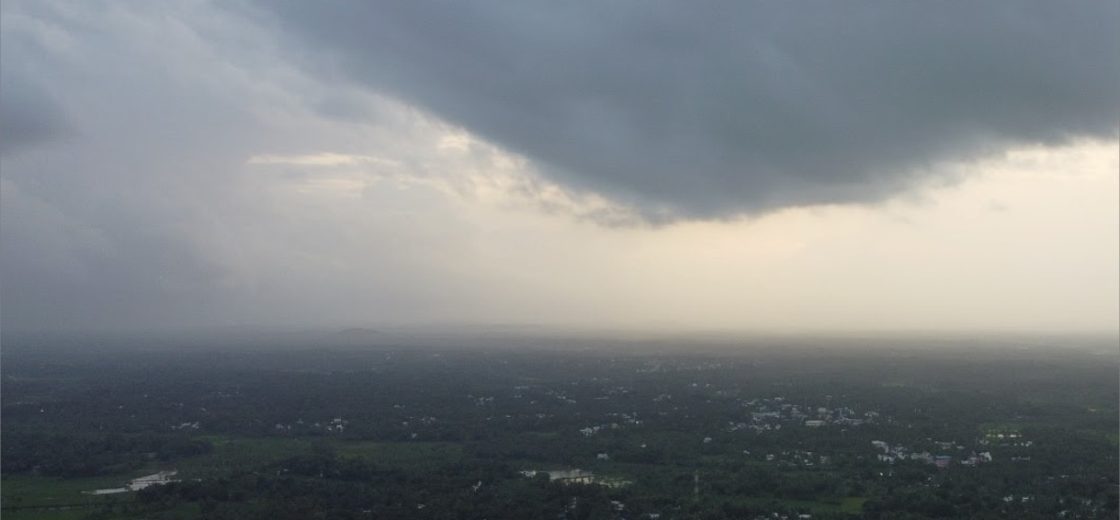
- “Wind Tunnel” Effect: It is the largest break in the entire 1,500 km length of the Western Ghats. This allows the moisture-laden Southwest Monsoon winds, which hit the Kerala coast, to sweep unimpeded through the gap into the interior regions of Tamil Nadu (like Coimbatore). This phenomenon significantly impacts the rainfall and climate patterns on both sides.
- Biogeographic Corridor: The Gap acts as a low-altitude corridor for species dispersal between the two distinct ecological zones of the Western Ghats (north and south of the Gap). Many plant and animal species found in the Deccan Plateau have been able to cross into Kerala, creating a unique mix of biodiversity.
In summary, the Palakkad Gap is not just a pass; it’s a geological scar that preserves the memory of continental breakups, dictates regional weather, and shapes local ecology.
