Who Is India’s Greatest Test Batsman? Strip the Romance, Bring the Facts
Indian cricket fans love a good argument. Sachin vs Dravid. Dravid vs Kohli. Kohli vs Gavaskar. Social media turns into a fish market every time someone asks “Who is India’s greatest Test batsman?”
Most debates collapse because people mix eras as if they are comparing four flavours of chips. They are not. They are comparing four completely different climates of cricket.
A fair comparison has to strip away fandom and judge the three things that define true greatness:
- Conditions
- Opposition
- Pressure
When you apply those relentlessly, the picture becomes surprisingly clear.
Kohli: The Modern Alpha, But Not the Greatest
Virat Kohli is a master of modern Test cricket: supreme fitness, intensity, consistency, hunger. He is the modern alpha, no doubt.
But he has batted in one of the most batter-friendly eras in cricket history. Not easy, of course, but nowhere near the brutality of the 1970s and 80s.
Putting him fourth in this all-time Indian Test list is not disrespect. It is just context and numbers catching up with emotions.
Rahul Dravid: The Protector, the Monk, the Firewall
Rahul Dravid’s greatness does not need poetic exaggeration. His numbers are enough:
- 13,288 Test runs
- Average of 52.31
- 36 Test hundreds
- SENA (South Africa, England, New Zealand, Australia) average close to 50
- Outstanding record in the fourth innings
Dravid was India’s crisis-management department. He opened when asked. He kept wickets when asked. He batted anywhere from opening to No. 6. He carried India’s batting line-up in many away series, especially in England.
Call him India’s most reliable Test batter, the ultimate team man. But even he did not walk into the kind of raw hostility that Sunil Gavaskar faced almost every series.
Dravid is a giant. Just not the single greatest ever, once you bring era and conditions into the frame.
Sachin Tendulkar: The Genius Who Carried a Billion People
Sachin Tendulkar is cricket’s universal language. You do not have to explain him to anyone. The name itself is a summary of an era.
His Test record is ridiculous:
- 15,921 Test runs
- 51 Test hundreds
- Average of 53.78
- SENA average of 51.30
- Most centuries by a visiting batter in SENA countries
- 24 years of international cricket under the heaviest public pressure any sportsperson has faced
He took on peak Donald, McGrath, Shoaib, Warne, Wasim and Waqar. He destroyed some of the best bowling attacks in their own backyards. And for a long stretch, when Sachin got out, half the country quietly switched off the TV.
But Tendulkar also had things Gavaskar did not have: a stronger batting core around him — Dravid, Laxman, Ganguly, later Sehwag — and slightly more batsman-friendly pitches in the TV and sponsorship era.
Sachin remains the greatest batting genius Indian cricket has produced. But genius and “greatest ever” are not always the same category, once you layer in the brutality of conditions.
Sunil Gavaskar: The Man Who Played on Nightmare Mode
This is where the debate really shifts. You simply cannot compare Gavaskar with Dravid, Sachin and Kohli without dragging context into the room.
1. The Opposition
Gavaskar faced the fiercest bowling cartel ever assembled, not in highlight clips, but in real time, again and again:
- Malcolm Marshall
- Michael Holding
- Andy Roberts
- Joel Garner
- Plus Lillee, Thomson, Imran and others at their peak
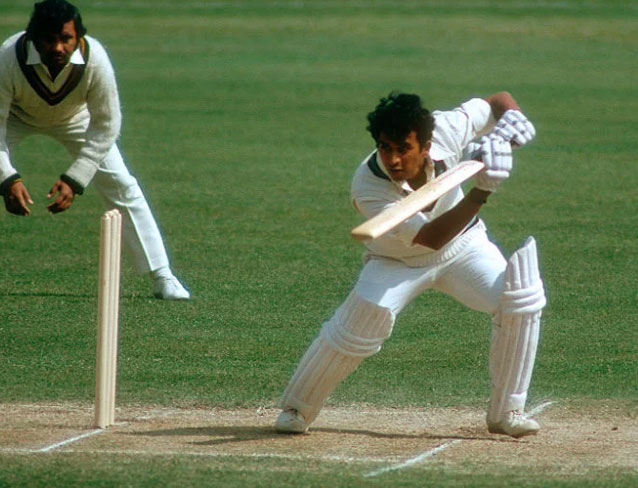
And he did it without a helmet, with older protective gear, lighter bats, and far less support staff and sports science.
2. The Pitches
Gavaskar batted on pitches that were halfway between fully uncovered wickets and modern curated surfaces:
- Unpredictable bounce
- Quick deterioration over the course of a match
- Much more natural seam and sideways movement
- Fast and hostile tracks in the West Indies
- Sharp turners in India
- Classic English seamers and bouncy Australian decks
These were not the “please last four days for TV” pitches. They were genuinely dangerous conditions. Batters did not just risk their wicket; they risked their body.
3. The Role
Gavaskar opened the batting when the ball was at its most lethal and the bowlers were at their freshest.
There was no Dravid behind him to repair things. No Laxman, no Sehwag, no Ganguly. India’s batting was fragile. In many ways, for a long time:
Gavaskar was the batting line-up.
4. The Records
His numbers, even without context, hold up:
- 10,122 Test runs
- Average of 51.12
- 36 Test hundreds
- SENA and worldwide record as an opener against the best fast bowling attacks in history
- Fourth-innings average of 58.25 – the highest in the world
- Only Indian to score a double century in the fourth innings
- 13 centuries against West Indies
- 774 runs at 154.80 on the 1971 West Indies tour as a debut series – almost mythical output
Then there is the famous 96 in Bangalore in 1987 against Pakistan on a rank turner. The ball was spitting, jumping and snaking. The second-highest score in that innings was just 26. Gavaskar later said he remembered only two balls from that knock. He was in a trance.
That was his final Test innings. He retired averaging over 58 in his last season. Most players fade. He walked away almost at the peak.
The Real Metric: How Tall Was the Mountain?
Once you stop treating this like a popularity contest, the core question becomes very simple:
How tall was the mountain each of them had to climb?
- Sachin was the brightest batting genius India has produced.
- Dravid was the most reliable shield, the ultimate crisis man.
- Kohli is the modern gladiator, a complete batter in the current era.
- Gavaskar played on “nightmare mode” and still put up elite numbers.
He faced the most dangerous bowlers, on the most hostile pitches, with the least protection, and often with the weakest support cast. And he still averaged over 50, still dominated West Indies in their absolute prime, still produced the highest fourth-innings average in Test history.
He did not just score runs. He changed how India looked at itself in Test cricket.
The Verdict: Numbers Plus Context
If you go purely by numbers, you can argue endlessly: Sachin has the most runs and hundreds, Dravid has the iron consistency, Kohli has wonderful peaks.
But once you blend numbers with conditions, opposition and pressure, the answer looks like this:
Sunil Gavaskar is India’s greatest Test batsman.
Sachin Tendulkar follows in a tight, photo-finish second place.
This is not an insult to anyone. It is just a recognition that Gavaskar’s mountain was steeper, sharper and far more dangerous than anything that came after.
Greatness is not only about how much you scored. It is about where you scored, when you scored, and who you were facing when you did it.
On that scale, Sunil Manohar Gavaskar stands slightly above even India’s greatest geniuses.
