Where Is Sultanpet in Palakkad?
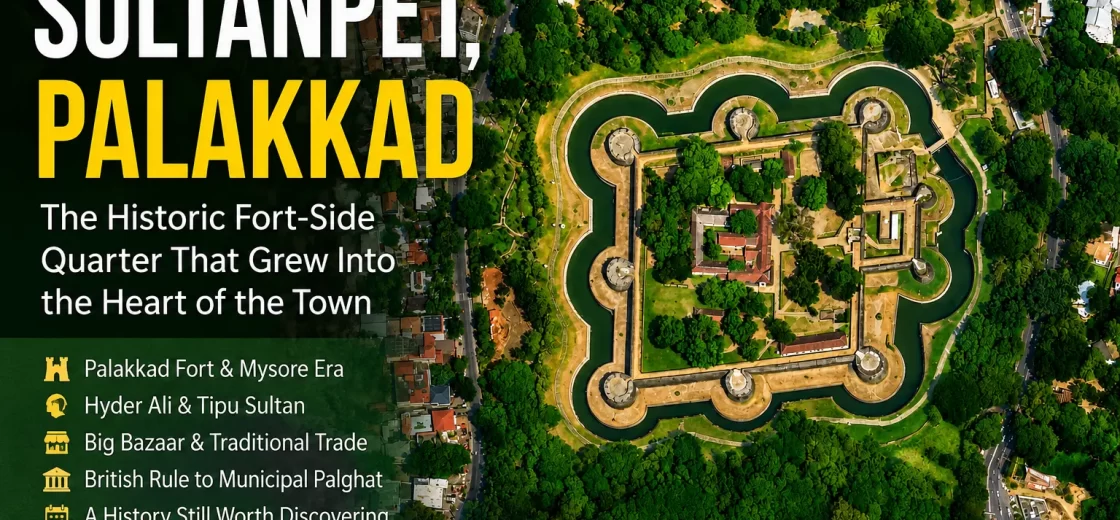
Sultanpet lies in the central part of Palakkad city, close to the historic Palakkad Fort and the old commercial areas around Big Bazaar.
This location is important for understanding its history.
Fortified towns across South India often developed commercial settlements immediately outside their military centres. Soldiers, officials, traders, travellers and residents needed food, clothing, tools, accommodation and other services.
Sultanpet appears to have developed within exactly this type of urban environment.
What Does the Name Sultanpet Mean?
The name Sultanpet itself offers an important historical clue.
Across southern India, variations such as pet, pete, pettah and pettai have historically been used to describe a settlement, market quarter or commercial locality.
Many towns in Karnataka, Kerala, Tamil Nadu and other parts of South India continue to preserve these names.
The word “Sultan” in Sultanpet naturally suggests a connection with the period when Palakkad came under the control of the rulers of Mysore.
It is therefore reasonable to interpret Sultanpet as something similar to:
“The Sultan’s settlement” or “the Sultan’s market quarter.”
However, this remains a historical interpretation rather than a conclusively documented naming event.
Palakkad Before the Mysore Period
To understand the origins of Sultanpet, it is necessary to understand the strategic importance of Palakkad itself.
Palakkad lies beside the famous Palakkad Gap, one of the largest natural breaks in the Western Ghats.
For centuries, this opening connected the Malabar region with the plains around Coimbatore and the interior of Tamil Nadu.
People, armies, traders, agricultural products, cattle and other goods moved through this geographical corridor.
Control over Palakkad therefore meant control over an important east-west route between Kerala and Tamil regions.
The Palakkad Achans and Hyder Ali
During the eighteenth century, Palakkad was ruled by the Palakkad Achans.
Facing increasing political and military pressure from the Zamorin of Kozhikode, the ruler of Palakkad sought assistance from Hyder Ali of Mysore in 1757.
This intervention eventually expanded Mysore’s influence over Palakkad.
The region subsequently became deeply involved in the larger conflicts between Mysore, the British East India Company and other South Indian powers.
Hyder Ali and Palakkad Fort
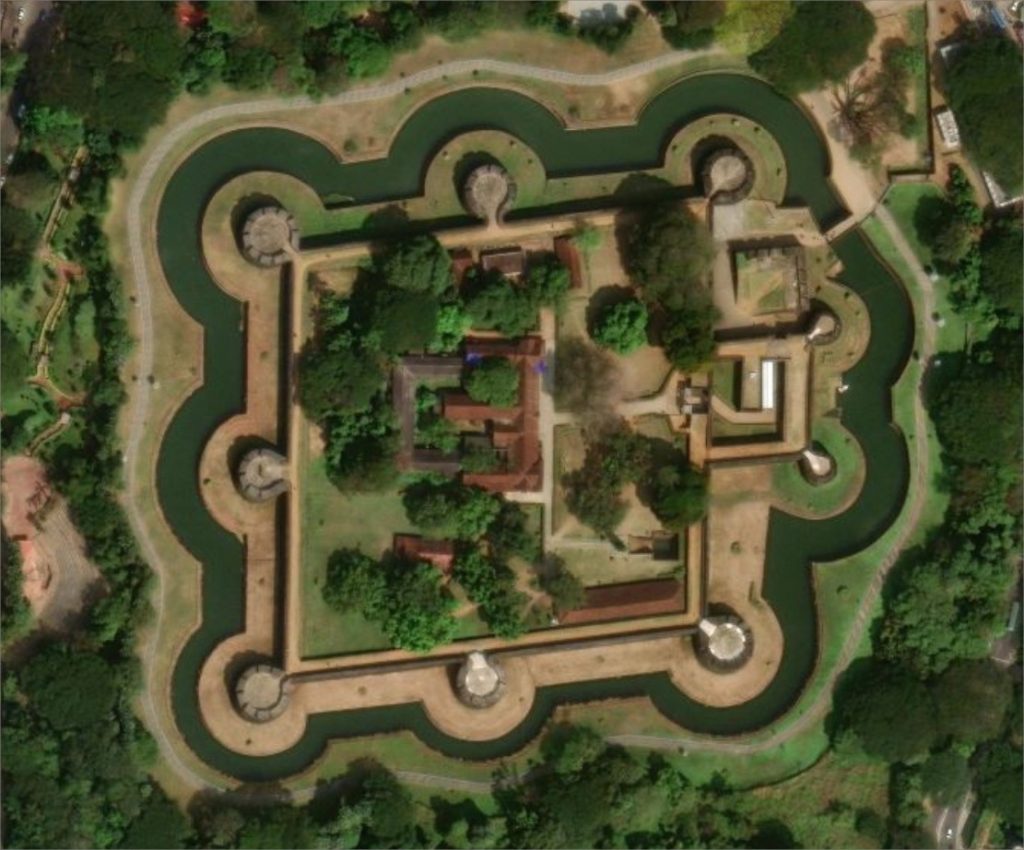
The most important surviving monument connected with this period is Palakkad Fort.
The present fort is generally associated with Hyder Ali, who rebuilt it around 1766.
The location was strategically valuable because it helped control movement through the Palakkad Gap.
From Palakkad, Mysore could maintain an important military connection between the Malabar region and territories east of the Western Ghats.
Is Palakkad Fort Really Tipu Sultan’s Fort?
Palakkad Fort is widely known locally as Tipu’s Fort.
However, this popular name can create a historical misunderstanding.
The main reconstruction of the present fort is associated with Hyder Ali, Tipu Sultan’s father, and substantially predates Tipu Sultan’s rule.
Tipu Sultan later controlled Palakkad after succeeding Hyder Ali, but describing him as the original builder of the present fort would be inaccurate.
Tipu Sultan and Palakkad
Hyder Ali died in 1782, after which his son Tipu Sultan became ruler of Mysore.
Palakkad consequently remained under Mysorean influence during an extremely turbulent period of South Indian history.
The Anglo-Mysore Wars repeatedly brought military activity into the region.
It is within this historical environment that the name Sultanpet becomes particularly significant.
Did Sultanpet Develop Around Palakkad Fort?
The geographical evidence makes this highly plausible.
Military forts rarely existed in complete isolation. Settlements usually grew around them to support military personnel, administrators, merchants and travellers.
Such communities required:
- food markets
- textile traders
- tailors
- blacksmiths
- transport services
- accommodation
- agricultural supplies
- general merchants
Sultanpet’s location immediately beside Palakkad Fort strongly fits this historical pattern.
Over time, the wider Fort-Sultanpet-Big Bazaar belt developed into one of Palakkad’s most important commercial centres.
British Capture of Palakkad
Palakkad Fort changed hands during the Anglo-Mysore conflicts.
British forces finally secured the fort in 1790.
Following the Treaty of Seringapatam in 1792, British influence over Malabar expanded significantly.
Palakkad subsequently became part of the colonial administrative and commercial structure of the Madras Presidency.
Political control had changed, but Palakkad’s geographical importance remained.
The Palakkad Gap continued to make the town an important route between Malabar and Coimbatore.
Sultanpet Under British Palghat
During British rule, Palghat gradually developed from a fortified settlement and market centre into a more organised urban town.
Commercial streets expanded around the old fort, while administrative institutions, markets and residential areas developed around them.
Sultanpet’s location placed it directly within this expanding urban core.
Palakkad Municipality Was Established in 1866
A major development occurred when Palakkad became one of the earliest municipalities in present-day Kerala.
Palakkad Municipality was constituted on 1 November 1866.
By this period, Palghat was developing beyond its original identity as a fort-centred settlement into a structured municipal town.
Sultanpet formed part of this emerging urban landscape.
Sultanpet Was an Important Urban Division by 1900
Historical material relating to a cholera outbreak in Palghat in 1900 provides useful evidence about the importance of Sultanpet.
During epidemic-control operations, the municipality was divided into administrative circles that included areas such as Sultanpet and Kalpathi.
Significantly, the Sultanpet circle included Big Bazaar and nearby localities.
This suggests that by the beginning of the twentieth century, Sultanpet was already much more than a small street or neighbourhood.
It represented a recognised and significant urban section of Palghat.
Big Bazaar and the Commercial Growth of Sultanpet
The association between Sultanpet and Big Bazaar is particularly important.
Historic market towns often developed specialised commercial streets.
Different streets could become known for textiles, tailoring, metalwork, agricultural products, food or particular communities of craftsmen.
Local historical accounts similarly remember specialised occupations and commercial streets around Sultanpet.
Tailor Street and Traditional Trades
One such locality is Tailor Street.
Local accounts describe tailors, textile workers and merchants working in this part of Palakkad during the colonial period.
Some accounts mention connections with textile centres such as Coimbatore, Tiruppur and Kanchipuram.
These accounts are valuable elements of Palakkad’s local memory, although individual claims require additional archival confirmation before they can be treated as established historical fact.
Sultanpet and Palakkad’s Connection With Tamil Nadu
Palakkad has historically maintained strong commercial and cultural connections with regions east of the Western Ghats.
The Palakkad Gap made movement towards Coimbatore and the Tamil plains easier than across most other sections of the Western Ghats.
Traders, artisans, workers and families travelled through this corridor for generations.
This movement contributed significantly to Palakkad’s distinctive social and commercial character.
Sultanpet, located within the heart of the trading town, would naturally have been part of these exchanges.
How Sultanpet Became Part of Modern Palakkad
During the twentieth century, Palakkad expanded rapidly.
Road transport increased, government offices expanded, new residential areas developed and modern commercial establishments spread beyond the old fort area.
Yet Sultanpet continued to remain an important part of central Palakkad.
Today, thousands of people pass through Sultanpet without necessarily realising that the streets around them evolved from one of Palakkad’s oldest fort-side commercial settlements.
Was Sultanpet Named After Tipu Sultan?
The most accurate answer at present is:
It is historically plausible, but not conclusively proven from readily available primary documentary evidence.
Several facts support a Mysore-period connection:
- Palakkad came under Mysorean control.
- Hyder Ali rebuilt Palakkad Fort.
- Tipu Sultan subsequently ruled Mysore and controlled Palakkad.
- Sultanpet is located beside the historic fort.
- The term pet/pettah traditionally referred to settlements or commercial quarters.
Together, these facts make a Mysore-era origin for the name reasonable.
However, saying that “Tipu Sultan founded Sultanpet” requires stronger documentary evidence.
What Evidence Could Confirm the Origin of Sultanpet?
A definitive answer may eventually come from historical documents.
Researchers should look for early references using alternative spellings such as:
- Sultanpet
- Sultan Pettah
- Sultanpettah
- Sultan Petta
- Sultan Peta
Potential sources include:
- Madras Presidency maps
- Malabar District Gazetteers
- Palghat municipal records
- British revenue records
- early census reports
- land and property documents
- travellers’ accounts
- old commercial directories
- historic maps of Palghat
Do Not Confuse Palakkad Sultanpet With Sultanpet Tope
Anyone researching Sultanpet online should be aware of an important source of confusion.
Many historical references to Sultanpet or Sultanpet Tope refer to a completely different location near Srirangapatna in Karnataka.
That Sultanpet is associated with military fighting during the Fourth Anglo-Mysore War of 1799.
It is not the Sultanpet in Palakkad.
Search results therefore need to be checked carefully before historical information is attributed to Palakkad.
Why Sultanpet Matters in Palakkad History
The history of Sultanpet connects several important chapters in the development of Palakkad:
- the Palakkad Achans
- the strategic importance of the Palakkad Gap
- Hyder Ali and Mysore’s intervention in Palakkad
- the rebuilding of Palakkad Fort
- Tipu Sultan’s rule
- the Anglo-Mysore Wars
- British occupation of Palghat
- the formation of Palakkad Municipality
- Big Bazaar and traditional commerce
- migration of traders and craftsmen
- the development of modern Palakkad city
Sultanpet should therefore not be viewed simply as another commercial locality.
It appears to form part of the historic fort-and-market nucleus around which modern Palakkad grew.
A Palakkad History Still Waiting to Be Fully Documented
Several fascinating questions remain unanswered.
When does the name Sultanpet first appear in historical records?
What were the original boundaries of Sultanpet?
Which were its oldest streets?
Who were its earliest residents and traders?
How did Big Bazaar develop?
What shops existed here 100 or 150 years ago?
Are historic buildings still hidden behind modern shopfronts?
Do old municipal records preserve forgotten street names?
Answers may survive in old maps, municipal files, family documents, photographs, land deeds and the memories of Palakkad’s older residents.
Documenting those sources could help reconstruct an important but often overlooked chapter of Palakkad history.
Frequently Asked Questions About Sultanpet, Palakkad
Where is Sultanpet in Palakkad?
Sultanpet is located in central Palakkad, close to Palakkad Fort and the traditional commercial areas around Big Bazaar. It forms part of the historic core of Palakkad city.
Why is Sultanpet called Sultanpet?
The name probably combines the word “Sultan” with the South Indian term “pet” or “pettah”, meaning a settlement or commercial quarter. Its location near Palakkad Fort and Palakkad’s history under Mysore make a Mysore-period origin plausible, although the exact naming event has not yet been conclusively documented.
Was Sultanpet founded by Tipu Sultan?
There is currently insufficient readily available primary evidence to state conclusively that Tipu Sultan personally founded Sultanpet. The locality is historically associated with the period of Mysorean control, but stronger documentary evidence is needed before making such a claim.
Did Tipu Sultan build Palakkad Fort?
The present Palakkad Fort is principally associated with Hyder Ali, who rebuilt it around 1766. Tipu Sultan later controlled Palakkad after succeeding his father, which is one reason the fort is popularly called Tipu’s Fort.
Why was Palakkad important to Hyder Ali and Tipu Sultan?
Palakkad controlled access through the Palakkad Gap, the major natural opening in the Western Ghats connecting Malabar with the plains around Coimbatore. This gave Palakkad considerable military and commercial importance.
What is the connection between Sultanpet and Big Bazaar?
Historical evidence indicates that Big Bazaar formed part of the wider Sultanpet urban area. By around 1900, Sultanpet was recognised as an important municipal division within Palghat.
When was Palakkad Municipality established?
Palakkad Municipality was constituted on 1 November 1866, making it one of the earliest municipalities in present-day Kerala.
Is Palakkad’s Sultanpet the same as Sultanpet Tope near Srirangapatna?
No. Sultanpet Tope near Srirangapatna in Karnataka is a different historical location associated with military events during the Fourth Anglo-Mysore War in 1799. It should not be confused with Sultanpet in Palakkad.
How old is Sultanpet in Palakkad?
The precise date of the settlement’s origin has not yet been conclusively established. Its connection with Palakkad Fort and the Mysore period suggests that its history may extend back to at least the late eighteenth or nineteenth century. Documentary evidence confirms that Sultanpet was an established urban area by around 1900.
Help Us Document the History of Sultanpet
Local history cannot be reconstructed from government archives alone.
If your family has lived or conducted business in Sultanpet, Big Bazaar or the Palakkad Fort area for generations, you may possess historically valuable information.
Old photographs, shop bills, property documents, family records, maps, letters and personal memories can help build a more accurate history of this part of Palakkad.
If you have historical photographs or information about Sultanpet, please share them with PalakkadNews.com so that this history can be documented for future generations.
Editorial Note: Some aspects of the early history of Sultanpet, particularly the exact origin and earliest recorded use of the name, still require archival verification. PalakkadNews.com welcomes documentary evidence, historical maps, photographs and corrections from researchers and local residents.
